
When we first explain a remote control lawn mower, people often ask the same question: how can a machine cut grass while the operator stands several meters away? The answer combines a remote controller, drive system, cutting deck, power source, and safety technology. Together, these parts create a practical machine for steep slopes, uneven ground, and other difficult terrains. In this guide, we will explain how the lawn mower works in simple terms.
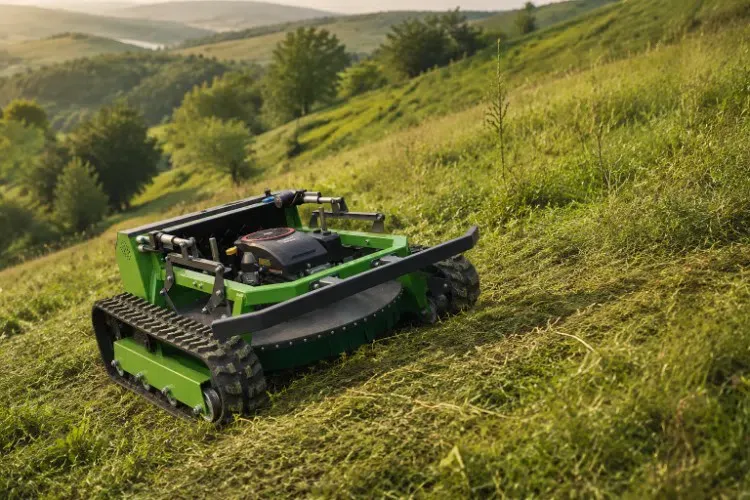
What Is a Remote-Controlled Lawn Mower?
A remote-controlled mower lets an operator control the machine without sitting on it or walking behind it. The operator uses a wireless controller to manage movement, speed, direction, and cutting functions. This design gives the operator a better view of the work area and creates more distance from the cutting deck. For professional lawn care, that can make a big difference.
The Basic Working Principle
So, how does a remote mower work? First, the operator starts the machine and connects the remote controller. Next, the controller sends commands to the mower's electronic control system, which manages the drive motors or hydraulic system. The mower then moves according to the operator's input while the cutting system removes grass and vegetation.
Modern remote mower technology can include tracked drive systems, electronic speed control, emergency stops, and adjustable cutting systems. Some machines also use sensors to monitor important operating conditions. The exact setup varies by model, but the basic idea remains simple: you control the machine, and the machine does the hard work.
How the Main Systems Work Together
A professional machine needs more than a powerful engine. Our view is simple: good mower operation comes from several systems working together smoothly. The controller provides commands, the drive system creates movement, and the cutting deck handles vegetation.
Remote Control and Drive System
The remote control acts like the operator's hands. Joysticks or buttons can control forward movement, reverse movement, steering, speed, and blade operation. The receiver inside the mower processes these commands and sends them to the appropriate control components.
Crawler tracks can provide strong traction on uneven ground. They also spread the machine's weight over a larger contact area. This helps the mower stay stable when the surface becomes rough or soft. For professional users, that stability can improve both control and productivity.
Cutting System and Adjustable Height
The cutting deck does the actual mowing. Depending on the machine, it may use rotary blades, flail knives, or another cutting system. The blades cut grass into smaller pieces, while the deck directs the grass clippings away from sensitive components.
An adjustable cutting height gives operators more control over the final result. Short grass may need a lower setting, while tall vegetation often requires a higher first pass. We recommend selecting the cutting height according to grass type, terrain, and working conditions.
Why Remote Mowers Handle Steep Slopes
One major reason people choose a remote control mower involves slopes. Traditional gas powered mowers can become difficult to control on steep or uneven land. Walking behind a push mower can also place the operator directly on a dangerous slope. A remote machine changes the operator's position.
Stability on Uneven Ground
Many slope-focused machines use a low center of gravity and wide tracks. These features help the mower maintain contact with the ground. Some professional models can work on very steep slopes, but the safe angle depends on the machine and conditions. Operators should always follow the manufacturer's limits.
Research also shows the growing role of remote-controlled machines for slope mowing. A 2026 agricultural research paper described a remote-controlled mower designed for weeds over 1 meter high and slopes up to 45 degrees. The researchers focused on stable operation while keeping the operator in a safer position.
Handling Slopes More Safely
Handling slopes requires more than strong traction. Wet grass, loose soil, rocks, roots, and hidden holes can change machine behavior quickly. We always recommend checking the terrain before starting and keeping people away from the working zone.
Safety organizations also warn users to respect manufacturer slope limits and local working conditions. British Association of Landscape Industries guidance highlights traction loss, rollover risks, thrown debris, and wet-weather limitations.
Remote Mowers vs. Robotic Lawn Mowers
People often use robotic mowers, robotic lawn mower, and remote mowers as if they mean the same thing. They do not always describe the same operating method. Understanding this difference helps buyers choose the right machine.
How Robot Lawn Mowers Work
Autonomous robot lawn mowers work with limited direct control from an operator. Depending on the model, they may use boundary systems, sensors, mapping, GPS, or other navigation technology. Many residential robotic mowers follow programmed routes and return to a charging station when their battery needs power.
A remote-controlled mower works differently. The operator actively controls its movement and cutting operation in real time. This approach can suit professional mowing where terrain changes quickly and the operator needs immediate control.
When Remote Control Makes More Sense
Remote-controlled machines often suit heavy duty applications. These may include:
· Steep grass banks
· Orchards
· Roadsides
· Solar farms
· Riverbanks
· Construction sites
· Parks and large green areas
· Tall grass and dense vegetation
In these situations, direct human control can provide useful flexibility. The operator can change direction or speed immediately when the terrain changes.
Key Safety Features to Look For
Remote operation does not mean risk-free operation. Instead, it helps move the operator away from some machine hazards. Good safety features still matter.
Emergency Stop and Signal Protection
An emergency stop should allow the operator to stop the machine quickly. Some systems also use fail-safe functions when the remote signal becomes unavailable. These features can help prevent uncontrolled movement.
Before every job, we recommend checking:
1. Remote connection
2. Emergency stop function
3. Blade condition
4. Track or tire condition
5. Fuel or battery level
6. Cutting deck condition
7. Terrain and obstacles
8. Safe operating distance
OSHA also stresses the importance of following manufacturer instructions and evaluating terrain before mowing.
Power, Efficiency, and Lawn Care
A modern mower must deliver more than cutting power. It should also save time, reduce unnecessary effort, and match the working environment.
Gas, Electric, and Hybrid Options
Gas-powered systems can provide strong output for demanding vegetation. Electric systems offer quiet operation and can reduce local emissions during use. Hybrid designs can combine the strengths of different power systems.
For example, Yanmar describes a hybrid remote-controlled mower that uses electric drive for travel while an engine supplies cutting power. The design also supports quieter movement when the cutting engine does not need to run.
For users who value an eco friendly approach, electric technology can be attractive. However, battery capacity, charging time, terrain, and workload still matter. There is no magic button—sadly, even advanced technology cannot negotiate with an empty battery.
Why Remote Mowers Are Becoming More Popular
The biggest benefit comes from combining safety, control, and productivity. A remote mower can reduce the need for operators to walk directly across difficult slopes. It can also help one operator manage areas that would otherwise require more physical effort.
Less Physical Work, More Control
Traditional mowing can involve heat, vibration, noise, and long hours of walking. Remote operation can reduce some of that physical burden. Operators can stand in a better position while controlling the machine from a distance.
For professional contractors, this can help save time during repetitive mowing work. A research project on remote slope mowing reported significantly higher working efficiency than walking-type mowing in its test conditions.
Choosing the Right Remote Mower
Not every machine fits every job. Before buying, we suggest looking beyond engine power or cutting width. The best machine should match your terrain, vegetation, working hours, and safety requirements.
A Practical Buying Checklist
Consider these points before making a decision:
· Maximum safe slope angle
· Drive type: tracks or wheels
· Cutting width
· Cutting system
· Adjustable cutting height
· Remote control range
· Emergency stop system
· Battery or fuel capacity
· Working speed
· Maintenance requirements
· Machine weight and transport size
· Available service and spare parts
A heavy duty mower may perform well in tall vegetation, while a smaller machine may work better in narrow areas. The right balance matters more than choosing the biggest machine available.
Final Thoughts
So, how does a remote mower work? In simple terms, the remote controller tells the mower where to move and what to do. The drive system handles the terrain, while the cutting deck handles the grass. Sensors and advanced technology can add another layer of control and protection.
At RAYWAY, we believe useful machinery should make difficult work easier. A well-designed remote control lawn mower can help professionals manage slopes, orchards, roadsides, and other challenging areas with less physical effort. When the terrain gets rough, the right machine can turn a stressful mowing job into a much more controlled one.


