
Buying a mower sounds simple until you face a steep hill, tall grass, or rough ground. Suddenly, choosing between a lawn mower, a gas mower, and a remote machine feels less obvious. We created this Remote-Controlled Lawn Mower Buying Guide to make that choice easier. Whether you manage a farm, orchard, roadside area, or commercial property, the right mower can save time and reduce daily work.
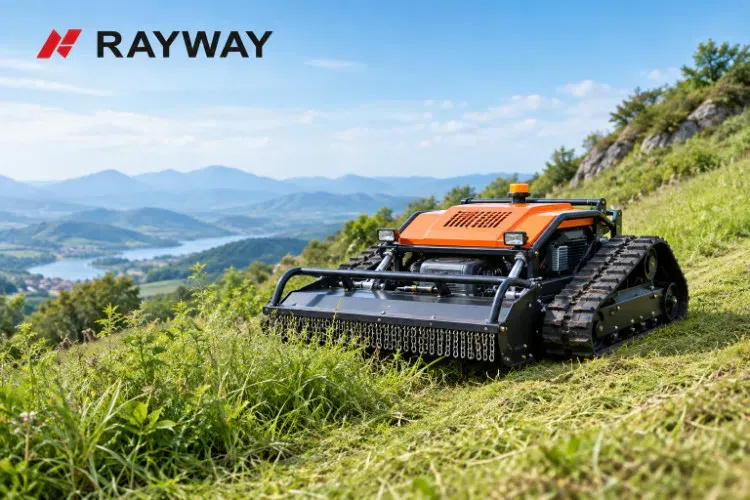
At Shandong RAYWAY Lawnmower, we understand that every mowing job has different demands. A small garden needs one type of machine, while a large hillside needs something much tougher. Our goal is to help buyers compare machines based on real working conditions. After all, a mower should work for you, not make you work harder.
1. Start With Your Mowing Conditions
Before comparing brands, look at the land first. The ground usually tells us more than a product brochure does. Consider the slope, grass type, obstacles, soil condition, and mowing frequency. These factors help determine whether you need a standard machine or a heavy duty mower.
Flat Lawns Need Different Machines
Flat lawns usually work well with conventional mowers. A walk-behind mower can handle smaller areas with simple grass maintenance. A gas mower can provide strong power for regular cutting. However, these machines may become harder to control as the terrain becomes rough or steep.
Challenging Terrain Needs More Control
Challenging terrain changes the entire mowing process. Steep slopes, uneven ground, ditches, and soft soil can make manual mowing tiring. A remote-controlled machine lets the operator stand away from the cutting area. This creates a more controlled working position and can make difficult jobs easier.
2. Choose the Right Mower Type
There are many mower designs on the market today. We should compare them based on the job, rather than simply choosing the most expensive model. A professional mower often provides stronger construction and better performance for frequent work. However, casual users may not need every commercial feature.
Walk-Behind and Gas Mowers
A traditional lawn mower remains useful for many small properties. It offers simple operation and easy access to narrow lawn areas. A gas mower also provides continuous working power when fuel is available. Yet operators still need to walk behind the machine, which can become tiring over large areas.
Ride-On and Turn Mowers
A ride-on mower can cover large lawns quickly. Some models use a zero-turn system for fast changes in direction. This turn mower design works well on open and relatively flat ground. However, steep slopes can create additional control and safety concerns.
Robotic and Remote-Controlled Mowers
Robotic mowers can automate routine grass cutting on suitable lawns. They often work well where the terrain remains predictable. A remote-controlled mower gives the operator direct control over movement and cutting. That makes it useful for slopes, orchards, roadside areas, and other demanding locations.
3. Check Cutting Performance
Cutting performance matters just as much as driving performance. A machine may move well but struggle when grass becomes thick or wet. We recommend checking the blade system, cutting height, engine power, and working width. These details show how efficiently the machine can cut grass in real conditions.
Compare Cut Width
Cut width directly affects mowing efficiency. A wider deck can cover more ground during each pass. However, wider does not always mean better. Narrower equipment may work better around trees, tight spaces, and irregular areas.
For example, imagine two machines with different cutting widths:
Machine A: 60 cm cut width
Machine B: 100 cm cut width
Same working speed: 4 km/h
Same grass condition
Machine B can cover more ground per pass. Yet Machine A may offer better access in narrow areas. Therefore, we should match cutting width to the working environment.
Look at How the Mower Cuts
The phrase mower cuts sounds simple, but cutting quality depends on several factors. Blade speed, blade design, grass height, and travel speed all affect the final result. Thick grass may also require slower movement. A good machine should maintain a clean cut without constant clogging.
4. Look for Heavy-Duty Construction
Frequent commercial work demands more from a machine. A commercial mower needs to survive repeated use and difficult conditions. Strong frames, durable tracks, reliable drive systems, and quality cutting components can improve long-term performance. We always recommend looking beyond appearance when comparing machines.
Check the Drive System
The drive system controls how the machine moves across the ground. Tracked designs can provide useful traction on uneven surfaces. They can also help the machine maintain contact with the ground. For steep areas, traction becomes especially important.
Consider Long-Term Maintenance
A mower represents more than its purchase price. We should also consider maintenance, spare parts, fuel or power costs, and service support. A machine that requires constant repairs can quickly become expensive. Simple access to key components can make routine maintenance much easier.
5. Think About Remote Control Features
Remote operation is one of the main advantages of a remote mower. However, not every remote system provides the same experience. We recommend checking the control distance, response time, emergency stop, and signal stability. These features can make a major difference during real work.
Check the Control Range
A useful remote system should provide enough operating distance for the job. The operator needs a clear view of the machine while working. Line-of-sight operation also helps the operator understand changing ground conditions. We believe simple controls often work better than complicated systems.
Safety Should Come First
A remote mower should include practical safety features. Look for emergency stop functions, reliable braking, stable control, and protection around moving components. Operators should also keep people and animals away from the working zone. Good technology helps, but careful operation still matters.
6. Match the Machine to Your Work
Different users need different mower specifications. A homeowner may focus on ease of use and storage. A landscaping company may care more about productivity and operating costs. Farmers and land managers often need traction, durability, and strong cutting performance.
For Homeowners
A standard mower can handle many residential lawns. Robotic mowers may suit users who want automated routine mowing. However, a remote-controlled mower becomes more useful when the property includes slopes or rough ground. The key is to avoid paying for features you will never use.
For Commercial Operators
A commercial mower needs to handle repeated workloads. Landscaping contractors may also need machines that move between different job sites. Strong cutting performance and easy controls can improve daily productivity. In demanding environments, a heavy duty design may offer greater value.
For Farms and Orchards
Farm and orchard mowing often involves irregular ground. Trees, grass growth, slopes, and narrow working spaces can complicate the job. A remote-controlled machine can give operators better positioning during difficult cuts. This approach can also reduce the need to drive a large machine through sensitive areas.
7. Compare the Total Value
Price matters, but purchase price alone does not tell the whole story. We recommend comparing productivity, maintenance, fuel use, service support, and expected working life. A cheaper machine may cost more when repairs become frequent. On the other hand, a premium machine may offer features that some users never need.
Use this simple checklist before buying:
Working area size
Maximum slope requirement
Grass height and density
Cut width
Engine or motor power
Drive system
Remote-control range
Emergency stop function
Maintenance access
Spare-part availability
Warranty and service
Expected annual working hours
This remote mower buying guide should help you compare machines using practical information. We suggest writing down your requirements before contacting a supplier. It makes the buying process faster and prevents unnecessary features from sneaking into your budget.
8. Why Remote Mowing Can Make Sense
The biggest benefit comes from matching the machine to the terrain. A remote-controlled mower can operate in areas where walking behind a mower becomes uncomfortable or difficult. The operator can control movement while keeping a safer distance from the cutting deck. For professional users, that control can also make repeated mowing tasks easier to manage.
At Shandong RAYWAY Lawnmower, we focus on remote-controlled crawler mowers for demanding applications. Our machines serve areas such as orchards, hillsides, mountains, riverbanks, highways, farms, and photovoltaic sites. We combine strong mechanical performance with remote operation and practical cutting systems. In our experience, the right machine starts with understanding the land.
Final Buying Checklist
Choosing a mower does not need to feel like solving a puzzle. Start with your terrain, then consider cutting requirements, machine type, power, control, and maintenance. A traditional gas mower may suit a flat residential lawn, while a remote-controlled professional mower may better fit steep commercial terrain. The best buying decision comes from matching machine capability with actual working needs.
Before placing an order, ask the supplier for specifications, operating videos, maintenance information, and application examples. If possible, test the machine on conditions similar to your own site. That final step can reveal more than a long list of specifications. A good mower should not just cut grass; it should make the whole job easier.


