
Hillside grass cutting can turn a simple job into a serious challenge. Steep slopes, wet soil, and uneven terrain can make traditional mowing slow and risky. At RAYWAY, we believe the right machine can change the entire experience.
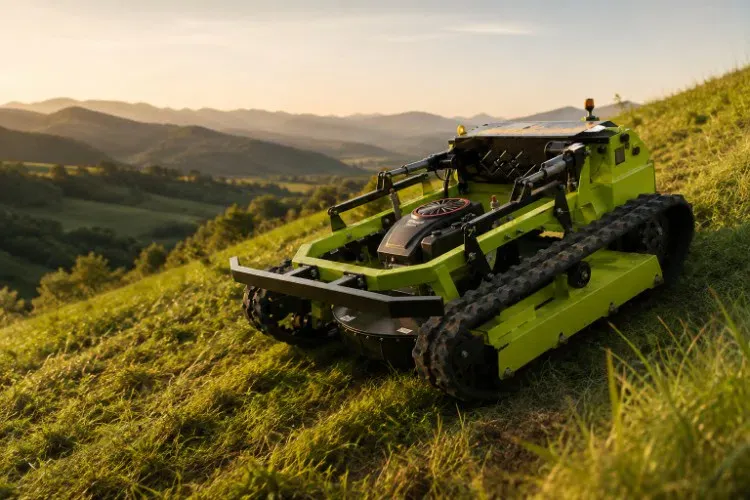
That is why a slope mower with a tracked drive system offers such a strong advantage. Tracks improve ground contact and help the mower move across difficult surfaces. Better traction also gives operators more control when ground conditions change unexpectedly.
A remote controlled slope mower adds another important benefit. The operator can remain at a safer distance while controlling the machine. In short, the mower tackles the hill while the operator avoids becoming part of the adventure.
Why Hillside Mowing Creates Special Challenges
Hills are rarely smooth and predictable. Grass may hide rocks, holes, roots, loose soil, or sudden changes in elevation. Therefore, a standard lawn mower may struggle to maintain traction and stability.
Different types of terrain require different mowing solutions. Dry grass, muddy ground, thick vegetation, and rocky surfaces all affect machine performance. We always recommend evaluating the work area before choosing equipment.
Steep slopes also change how weight moves across a machine. A mower with poor balance can become unstable when climbing or turning. The machine's design, traction system, and center of gravity all matter.
Uneven Ground Changes Everything
Uneven terrain creates constant movement beneath the mower. Wheels may lose contact with the ground when they cross holes or raised surfaces. As a result, the machine can lose traction at exactly the wrong moment.
Tracked systems spread the mower's weight across a larger contact area. This design can improve grip on soft or loose surfaces. It also helps the machine move more smoothly across changing ground conditions.
However, tracks do not make physics disappear. Operators should always follow the manufacturer's slope limits and safety instructions. Good equipment supports safe work, but smart operation remains essential.
Tracked Mowers Deliver Better Traction
The biggest advantage of a tracked mower is simple: more contact with the ground. Unlike traditional wheels, tracks distribute the machine's weight over a broader surface. This feature can reduce ground pressure and improve traction.
Our heavy-duty mowing solutions use tracked systems for demanding applications. These machines can handle slopes, orchards, roadsides, and other challenging locations. When the terrain gets rough, strong traction becomes more than a luxury.
A tracked slope mower can also maintain movement over grass, soil, and light debris. This helps operators complete large mowing tasks with fewer interruptions. Nobody enjoys getting a mower stuck halfway through the day.
More Grip Across Difficult Surfaces
Ground conditions can change quickly during a mowing project. Morning dew may create slippery grass, while rain can soften the soil. Tracks provide a larger grip area when compared with many conventional wheeled designs.
This advantage becomes especially useful on uneven ground. The tracks can maintain more consistent contact while crossing small obstacles. Consequently, the mower can move with greater confidence across complex work areas.
Still, traction depends on several factors. Soil moisture, vegetation density, slope angle, and machine weight all affect performance. We recommend choosing a mower according to the real job site, not just the sales brochure.
Low Centers of Gravity Improve Stability
Stability matters when mowing on hillsides. A lower center of gravity can help reduce unwanted weight transfer during movement. This becomes particularly important when the mower climbs, descends, or changes direction.
Professional mowers are designed with balance in mind. Engineers often place heavy components lower within the machine structure. This approach helps improve stability during demanding slope mowing tasks.
The relationship between tracks and weight distribution also matters. A wide tracked platform can create a more stable working stance. Together, these features help the mower manage challenging terrain more effectively.
Stability Supports Better Mowing Control
A stable machine allows smoother and more predictable operation. Operators can guide the mower without constantly fighting sudden movement. That makes slope mowing more efficient and less stressful.
A stable platform may also support more consistent cutting results. When the mower moves smoothly, the cutting system can follow the ground more effectively. This helps create a cleaner finish across changing terrain.
However, every hillside has limits. Never assume that a mower can safely handle every angle. Always check the manufacturer's specifications and inspect the work area before operation.
Remote Control Keeps Operators at a Safer Distance
A remote controlled slope mower allows operators to control the machine without standing beside it. This creates an important advantage on difficult slopes. The operator can often remain on more stable ground while guiding the mower.
The operator must maintain a clear line of sight during operation. Trees, buildings, tall vegetation, and terrain changes can block visibility. Good positioning helps the operator monitor both the mower and the surrounding area.
Remote operation can also help operators to quickly stop or redirect the mower when conditions change. For example, the operator may respond to unexpected obstacles without walking directly into the cutting area. A reliable emergency-stop function adds another important layer of control.
Reaching Areas That Traditional Mowers Cannot
Some hillside locations remain difficult to access with conventional equipment. These may include embankments, orchards, solar farms, and roadside slopes. A remote mower can help workers reach areas that would otherwise require more manual labor.
This capability can improve productivity on large properties. Instead of using handheld equipment for every difficult section, operators can manage more ground with a suitable machine. That can save time and reduce physical fatigue.
Of course, remote control does not mean unattended operation. Operators must remain focused throughout the job. A mower may be smart, but it still needs a responsible human nearby.
Adjustable Cutting Height Improves Results
Grass does not grow evenly across every hillside. Some areas contain short turf, while others develop tall and dense vegetation. An adjustable cutting height gives operators more flexibility.
We recommend selecting the cutting height according to grass conditions and terrain. Extremely low cutting may scalp uneven surfaces or strike hidden obstacles. Starting with a higher setting can provide a safer first pass.
After evaluating the results, operators can adjust the mower as needed. This step-by-step approach can improve both efficiency and cut quality. Sometimes the fastest solution is simply not rushing the first pass.
Heavy-Duty Design Handles Demanding Work
Hillside mowing often places extra stress on machinery. Engines, drive systems, cutting components, and tracks must perform under changing loads. Therefore, a heavy duty mower can offer important advantages for professional applications.
Strong construction supports long working hours and demanding conditions. Durable components can also help reduce unnecessary downtime. For commercial users, every hour spent repairing equipment can affect project costs.
When we design or select professional mowing equipment, we consider the entire working environment. Power alone is not enough. A useful machine must balance traction, stability, cutting performance, and operator control.
Choosing the Right Mower for Your Terrain
The best mower depends on the job. A small residential slope may require different equipment than a large commercial embankment. Before buying, consider the following factors:
Slope angle: Check the manufacturer's approved operating limits.
Ground conditions: Evaluate mud, loose soil, rocks, and hidden obstacles.
Vegetation: Consider grass height, density, and brush.
Cutting width: Match the mower size to the available working space.
Cutting height: Choose a machine with suitable adjustment options.
Remote range: Ensure the system supports safe operation with a clear line of sight.
Machine weight: Consider stability and ground pressure.
Maintenance needs: Select equipment that fits your service capabilities.
The best lawn mower for hillside work is not always the largest machine. Instead, it should match the terrain and the actual mowing task. A well-chosen mower can improve efficiency without creating unnecessary complexity.
Final Thoughts
We believe tracked mowers offer a practical solution for demanding hillside maintenance. Their broad ground contact, stable platform, and strong traction make them especially useful on steep slopes and uneven surfaces.
A professional remote-controlled system can add another major advantage. Operators can guide the mower from a safer position while maintaining a clear view of the work area. Combined with the right cutting height and heavy-duty construction, the results can be impressive.
Still, safe operation always comes first. Follow manufacturer limits, inspect the terrain, and never treat a slope casually. With the right machine and a careful operator, hillside grass cutting can become far more efficient—and much less of a white-knuckle experience.


