
Mowing a flat lawn feels simple. Mowing steep hills is a completely different game. One hidden rock, wet patch, or sudden turn can create a dangerous situation.
We believe safety should always come before a perfectly trimmed lawn. Whether you use a traditional lawn mower, an RC mower, or a heavy-duty remote controlled slope mower, good preparation matters.
The right equipment can make difficult work much easier. However, even the best machine cannot replace careful planning. Let's look at practical ways to cut grass safely on challenging slopes.
1. Check the Slope Before You Start
Before we mow steep slopes, we inspect the entire area. Steep ground can hide holes, rocks, tree roots, and other unpleasant surprises.
Walk around the slope first and look for:
Wet or loose soil
Hidden holes and ruts
Rocks and branches
Ditches and drop-offs
Tree stumps
Tall grass hiding obstacles
Uneven terrain
Nearby people or animals
OSHA recommends checking terrain conditions and following the slope limits specified by the mower manufacturer. When those limits are unavailable, operators should carefully evaluate the terrain before proceeding.
Measure the Slope Angle
A hill may look harmless from the bottom. Then you walk halfway up and suddenly feel like a mountain goat.
Use a slope indicator or digital inclinometer to measure the angle. Most importantly, check your equipment manual before operating on an incline.
Never assume every lawn mower can safely handle slopes. Different machines have different limits, wheel configurations, and stability systems.
2. Choose the Right Slope Mower
Choosing the correct machine is one of the biggest safety decisions. A standard residential mower may perform well on flat ground but struggle on steep hills.
For gentle slopes, a conventional mower may work within its manufacturer-approved limits. However, difficult terrain often requires specialized equipment.
A professional slope mower may provide better stability through:
Low center of gravity
Heavy-duty construction
Strong drive systems
Improved traction
Specialized wheel drive systems
Better balance on uneven terrain
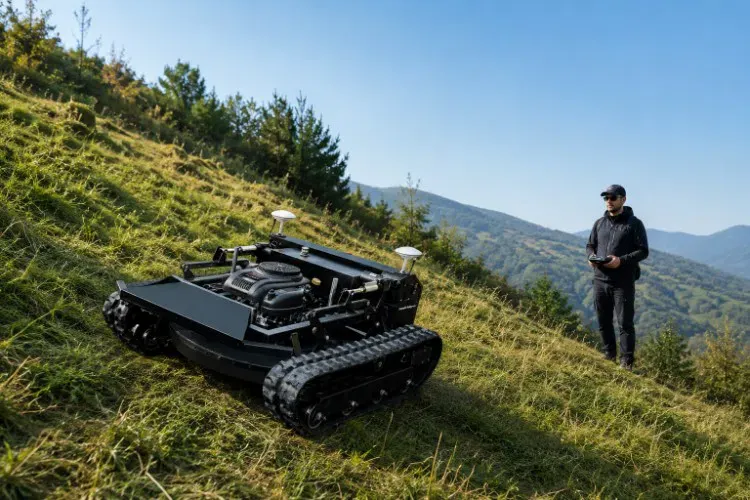
Some advanced machines use rubber tracks instead of conventional wheels. These tracks can increase ground contact and improve traction on challenging surfaces.
Why Remote Controlled Mowers Can Help
Remote controlled mowers allow operators to work from a safer location instead of standing directly beside the machine.
A remote controlled slope mower can be especially useful on steep, rough, or hazardous ground. The operator can maintain a safe position while controlling the mower remotely.
However, remote operation does not mean automatic safety. We still recommend maintaining a clear line of sight whenever possible.
Watch the machine continuously. Keep people away from the work area. Never assume the mower can magically escape every hazard.
3. Prepare Tall Grass Before Cutting
Tall grass creates several problems on steep hills. It can hide rocks, holes, branches, and sudden changes in ground level.
Therefore, avoid rushing into dense vegetation with a low cutting height. Start with a visual inspection whenever possible.
If the grass is extremely tall, consider making a first pass with a higher cutting height. Then gradually lower the mower for later passes.
This approach can:
Reduce engine strain
Prevent frequent clogging
Improve visibility
Create a cleaner finish
Reduce the chance of hitting hidden objects
For tight areas or dangerous edges, a string trimmer may offer a better solution. Sometimes the safest mowing method is simply choosing not to bring a large machine there.
4. Use the Correct Mowing Direction
The correct mowing direction depends on the equipment type. This point deserves serious attention.
For riding mowers, OSHA guidance generally recommends mowing up and down slopes rather than across them. However, operators must always follow the specific manufacturer's instructions for their machine.
Walk-behind mowers may require a different approach. For example, University of Minnesota Extension recommends mowing across a slope with a walk-behind mower to reduce the risk of slipping beneath the machine.
Avoid Sudden Turns and Fast Movements
Sharp turns can quickly cause trouble on steep ground. A sudden change in direction may reduce traction or destabilize the machine.
Instead, we recommend smooth movements and gradual adjustments. Slow down before changing direction.
Never rush downhill. Gravity already has enough confidence.
If the mower loses traction, stop the cutting operation according to the manufacturer's instructions. Regain control before continuing.
5. Keep Operator Safety as the Top Priority
Good operator safety starts before the engine begins. Wear suitable personal protective equipment for the machine and job.
Depending on the equipment, this may include:
Safety glasses
Hearing protection
Sturdy work boots
Gloves
Appropriate work clothing
Remove rocks, wires, sticks, and debris before mowing. These objects can become dangerous projectiles when the blades hit them.
Maintain a Safe Distance from Hazards
Stay away from retaining walls, ditches, water, embankments, and other drop-offs. These areas can increase rollover risks.
OSHA advises maintaining appropriate safety zones near unprotected edges and using alternative equipment where necessary.
Do not try to prove your courage to the hill. The hill will not be impressed.
When the terrain becomes too dangerous, stop. Use a string trimmer or another suitable method instead.
6. Inspect Your Lawn Mower Before Every Job
A quick inspection can prevent a long list of problems. Before mowing, check the condition of your equipment.
Inspect:
Blades and cutting components
Controls and emergency stops
Rubber tracks or tires
Wheel drive systems
Guards and shields
Fuel or battery levels
Loose bolts
Hydraulic components
OSHA requires power lawnmowers to include important guards and controls. Equipment that does not operate correctly should be removed from service until properly inspected or repaired.
Set the proper cutting height before entering the work area. A very low setting may cause blades to strike uneven ground.
For rough terrain, a slightly higher cutting height can help protect both the machine and the landscape.
7. Know When Not to Mow
Sometimes the smartest choice is waiting.
Avoid mowing when grass is wet or when the soil feels soft. Wet conditions can reduce traction and increase slipping risks.
Tall grass also makes hazards harder to see. If visibility is poor, inspect the area carefully before starting.
We also recommend stopping work when:
Rain begins
Traction becomes unstable
The machine shows unusual behavior
Visibility becomes poor
People enter the work zone
The slope exceeds equipment limits
Robotic mowers and other advanced machines can improve efficiency, but they also have operating limits. Always understand the machine before sending it onto difficult terrain.
Final Thoughts: Safety Beats Speed
Learning how to mow grass on steep hills safely requires the right combination of equipment, planning, and common sense.
A suitable RC mower or remote-controlled solution may help operators handle difficult slopes from a safer position. Strong traction, rubber tracks, and a stable drive system can also support better performance.
Still, we should never treat technology as a substitute for judgment. Check the terrain, understand the machine, maintain a clear line of sight, and respect the manufacturer's operating limits.
The goal is not simply to cut grass faster. The real goal is to finish the job safely and go home without an unexpected story about wrestling a runaway lawn mower.


