
Uneven ground can make ordinary mowing surprisingly difficult. Small bumps, holes, slopes, loose soil, and tall grass can slow the job down. At Shandong RAYWAY Lawnmower, we know that lawn care changes when the ground stops being flat.
Choosing a mower for uneven terrain requires more than checking engine power. You also need to consider traction, cutting height, wheel design, stability, and turning ability. In our experience, the right machine makes rough mowing safer, faster, and much less frustrating.
What Makes Uneven Ground Difficult?
A flat lawn gives a mower a predictable surface. Uneven terrain creates constant changes in height and traction. One moment, the machine cuts smoothly, and the next, it hits a hole or thick patch of grass.
Wet grass creates another problem. It can reduce traction and make the cutting system work harder. Meanwhile, tall grass can hide rocks, branches, and small holes beneath the surface.
Common Challenges on Rough Terrain
Before choosing equipment, we suggest checking these conditions:
Uneven ground and bumps
Steep or sloping areas
Wet grass
Loose soil
Tall grass
Hidden obstacles
Narrow working areas
Soft or muddy ground
These factors can affect both mowing quality and machine control. A suitable rough terrain mower should handle these changes without constant operator corrections.
What Type of Mower Works Best?
There is no single machine for every lawn. The best choice depends on lawn size, terrain, grass conditions, and how often you mow.
For small to medium sized lawns, a conventional walk-behind mower may work well. Models with larger rear wheels can move more easily over small bumps. A mower with rear wheel drive can also provide useful traction on sloping ground.
For more difficult areas, however, we often recommend considering a tracked machine.
Walk-Behind Mowers for Moderate Uneven Ground
A traditional lawn mower can handle moderate bumps when the surface remains reasonably firm. Larger wheels help the machine roll over small changes in ground height.
Rear wheel drive can also improve control. It gives the drive wheels better contact when the mower travels across uneven or slightly sloped areas.
These machines can suit medium sized lawns and regular lawn care. However, they may struggle when the terrain becomes very rough.
Tracked Mowers for Rougher Conditions
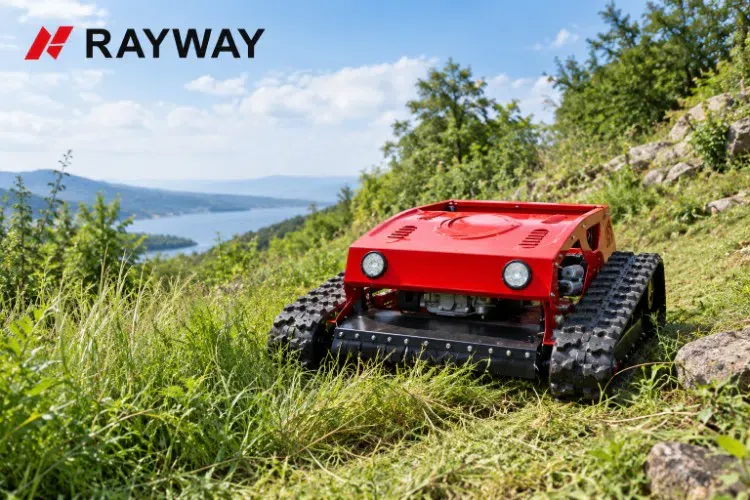
A tracked mower takes a different approach. Instead of relying mainly on wheels, it uses continuous tracks for ground contact.
This design can improve traction and stability across rough terrain. It also spreads the machine's weight across a larger contact area.
At RAYWAY, we develop remote-controlled lawn mower solutions for challenging environments. These machines can work across slopes, orchards, riverbanks, farms, and other difficult areas.
Why Wheel Size and Drive Matter
Wheel design has a major effect on how a mower handles uneven ground. Small wheels can drop into holes more easily. Larger wheels usually roll over bumps with less effort.
Drive type matters too. Rear wheel drive can help maintain traction on slopes and uneven surfaces. However, the terrain can eventually become too challenging for conventional wheels.
Larger Rear Wheels Have an Advantage
Larger rear wheels increase the distance between the mower deck and the ground. They can also make it easier to cross shallow dips and bumps.
For homeowners, this simple design feature can make mowing feel smoother. It can also reduce the effort needed to push the machine across uneven areas.
Still, wheel size cannot solve every problem. Very rough ground may require a more specialized machine.
Why Cutting Height Matters
Many people focus on engine power first. We think height adjustment deserves equal attention.
Grass height affects cutting load, appearance, and machine performance. Tall grass can place extra demand on the cutting system, especially when the mower moves slowly.
Use Adjustable Cutting Height
An adjustable cutting height allows operators to adapt to different grass conditions. You can raise the deck for tall grass and lower it when the surface allows.
When adjusting the cutting height, avoid cutting too aggressively in one pass. A gradual approach can reduce stress on the mower and improve cutting quality.
For rough ground, a slightly higher setting can also provide additional clearance. This helps reduce the chance of the deck contacting bumps or hidden objects.
How Tall Grass Changes the Mowing Job
Tall grass looks harmless until the mower enters it. Then the engine suddenly sounds much busier.
Long grass can wrap around components or overload the cutting system. Wet grass makes the situation even harder because it can stick together and reduce airflow.
Tips for Cutting Tall Grass
We recommend a few simple practices:
Check the area before mowing.
Remove visible branches and stones.
Start with a higher cutting height.
Reduce your travel speed.
Avoid mowing wet grass when possible.
Make a second pass when necessary.
Inspect the cutting system after heavy work.
These steps can make a big difference. Good preparation often saves more time than rushing through the first pass.
Turning Radius Can Make a Difference
The turning radius becomes important when the lawn contains trees, garden beds, fences, or narrow paths.
A mower with a tight turning radius can maneuver around obstacles more easily. This matters especially on small or medium-sized properties.
Match Maneuverability to the Lawn
For open areas, straight-line mowing may matter more than turning ability. For complex gardens, maneuverability becomes much more important.
Before buying, think about the actual layout of your lawn. A powerful mower that struggles around corners can become surprisingly annoying.
Sometimes, the smartest machine is simply the one that fits the property.
What About Robot Mowers?
A robot mower can provide convenient automatic lawn care. These machines work well on suitable lawns with relatively predictable surfaces.
However, rough terrain creates additional requirements. Deep holes, steep slopes, loose soil, and tall grass may exceed the design limits of some robotic models.
When a Robot Mower May Not Be Enough
A robot mower can suit regular grass maintenance. It may not replace a rough terrain mower for demanding vegetation management.
Remote-controlled machines provide a different solution. The operator can guide the mower through challenging areas while maintaining a safer working position.
This difference becomes important when the lawn includes steep slopes or difficult ground conditions.
Remote-Controlled Mowers for Difficult Ground
At Shandong RAYWAY Lawnmower, we focus on machines designed for challenging mowing environments. Our remote-controlled equipment gives operators direct control without requiring them to ride on the machine.
This setup can help when the ground becomes steep, uneven, or difficult to access. It also allows the operator to observe the mower from a suitable position.
A Practical Alternative for Rough Terrain
A remote-controlled mower can serve as an alternative when ordinary equipment reaches its limits. It can work across challenging terrain while reducing the need for direct physical control.
Our machines support applications such as:
Orchards
Hillsides
Riverbanks
Farms
Roadside vegetation
Municipal landscaping
Photovoltaic power stations
The right machine depends on the job. We always recommend matching machine specifications to actual ground conditions.
Buying Checklist for Uneven Ground
Before choosing your next mower, check the following points:
| Feature | Why It Matters |
|---|---|
| Wheel or track design | Affects traction and stability |
| Drive system | Influences movement on slopes |
| Cutting width | Affects working efficiency |
| Cutting height | Helps manage different grass conditions |
| Height adjustment | Provides mowing flexibility |
| Turning radius | Improves maneuverability |
| Ground clearance | Helps cross bumps and rough areas |
| Machine weight | Influences ground pressure |
| Remote control | Allows operation from a safer position |
| Service support | Helps reduce long-term downtime |
Do not choose equipment based on one specification alone. A balanced machine usually performs better across changing conditions.
A Note About Online Mower Research
Most buyers now compare machines online before making a decision. Sometimes a product page may not display correctly because of browser settings or compatibility issues.
If a website asks you to upgrade or use an alternative browser, check the manufacturer's official product information first. A reliable website should display this or other websites correctly across common modern browsers.
More importantly, compare technical specifications rather than relying only on photos. Real-world terrain demands real-world performance.
Our Final Advice
The best lawn mower for uneven ground depends on the terrain you need to manage. A conventional mower with larger wheels may work well for moderate bumps and small to medium sized lawns.
For serious rough terrain, tall grass, slopes, and difficult ground conditions, a specialized machine can offer greater control. Tracked designs and remote operation provide useful advantages in these environments.
At Shandong RAYWAY Lawnmower, we believe good mowing equipment should match the job. Flat lawns need simple solutions. Difficult ground needs something tougher.
When the grass gets tall and the ground gets messy, that is where the right machine earns its keep.


