
Farming is changing fast. Smart technology now helps farmers manage work with less effort. At Shandong RAYWAY Lawnmower, we see this change every day. Modern mowing equipment can save time, improve safety, and handle difficult terrain with greater confidence.
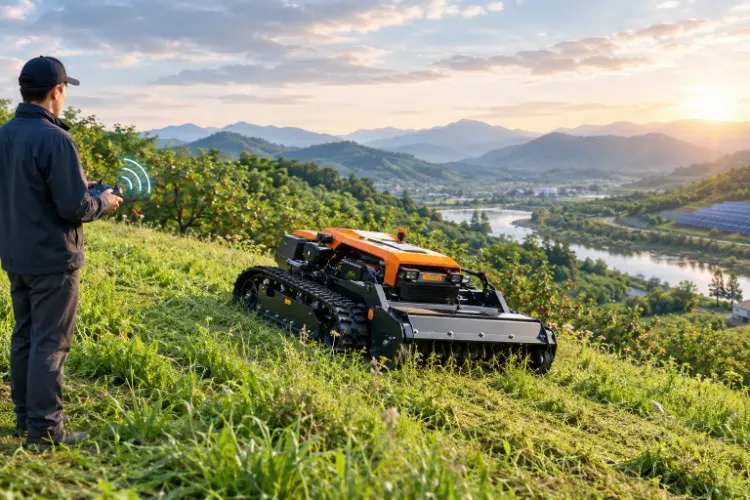
A smart farming mower does more than cut grass. It combines strong mechanical performance with intelligent control. A remote mower can work across slopes, orchards, fields, and other challenging areas. As a result, farmers and landscapers can spend less time fighting the terrain.
What Is Smart Farming Equipment?
Smart farming connects machines, data, and people. Farmers use technology to make better decisions and improve daily work. The goal is simple: get more work done while using fewer resources. FAO also highlights digital tools, automation, and efficient resource management as key parts of smart farming.
From Manual Work to Smart Machines
Traditional mowing often requires physical effort and constant attention. Workers may spend hours walking behind equipment or driving across uneven land. Smart machines reduce this burden and make repetitive work easier.
A modern professional mower can also support better work planning. Operators can monitor the machine, adjust its movement, and respond to changing conditions. That means less guesswork and more control.
Why Automation Matters
Labor remains a major concern for many farms and landscaping businesses. Automation can reduce repetitive tasks and operator fatigue. USDA research also shows that precision technologies can improve efficiency and reduce labor demands.
In simple terms, smart equipment lets people work smarter. Nobody dreams of spending all Saturday pushing a mower uphill. Your knees will probably agree.
Why Choose a Crawler Mower?
A Crawler Mower uses tracks instead of standard wheels. This design gives the machine strong traction and stable movement. It works especially well on uneven ground, slopes, and other demanding surfaces.
Better Stability on Difficult Terrain
Wheels can lose grip on loose or uneven surfaces. Tracks spread the machine's weight across a larger contact area. This design can improve stability and traction during mowing.
That advantage matters on hillsides and rough farmland. A heavy duty crawler mower can handle demanding jobs that may challenge smaller machines. However, operators should always follow the manufacturer's slope limits.
Strong Performance for Long-Term Work
Professional users need equipment that can work repeatedly. They also need simple controls and dependable performance. A well-designed crawler mower can support long term mowing tasks across large areas.
We believe durability should never come at the cost of usability. The best machine should be powerful, but also easy to control. After all, nobody wants a machine that needs a PhD just to start it.
How Does a Remote Mower Improve Efficiency?
A remote mower allows the operator to control the machine from a safe position. This design can reduce direct exposure to difficult terrain. It also gives operators a better view of the mowing area.
Remote Control Creates More Flexibility
A remote control lawn mower can operate around slopes, rough grass, and obstacles. The operator stays away from the cutting area. This approach can make certain professional mowing tasks more practical.
The operator can also change direction and speed when conditions change. Some systems provide responsive control for precise movement. This gives users more confidence during complex mowing operations.
Real-Time Operation and Monitoring
Modern machines increasingly use sensors and digital systems. These technologies can provide real time information about machine conditions and operation. Connected agricultural equipment can also support real-time performance data.
For us, this is one of the most exciting parts of smart machinery. The machine does the hard work while the operator stays informed. That combination can improve productivity without making the job unnecessarily complicated.
Remote Mowing for Hills and Uneven Ground
Slopes create serious mowing challenges. A machine must maintain traction while moving safely. The wrong equipment can increase the risk of slipping, tipping, or losing control.
Safer Operation on Slopes
A tracked remote mower can offer useful stability on challenging terrain. However, no machine makes every slope automatically safe. OSHA advises users to follow the manufacturer's slope limits and assess terrain hazards before mowing.
We recommend checking the ground before every job. Look for rocks, holes, wet areas, ditches, and hidden obstacles. Operators should also maintain a safe distance from dangerous edges.
Useful for More Than Farms
Smart mowing equipment can serve many industries. Common applications include:
Orchards and plantations
Hillsides and grass slopes
Riverbanks
Solar farms
Roadside vegetation
Municipal landscaping
Large private properties
Difficult agricultural areas
This flexibility makes a professional mower a useful investment for different working environments.
Robot Lawn Mower vs Remote Mower
People often compare a robot lawn mower with a remote-controlled machine. Both technologies reduce manual work. However, they serve different needs.
Where Robot Mowers Work Best
A robot mower usually works well on prepared lawns. Many models follow programmed routes and operate with limited human input. They suit regular residential and commercial lawn maintenance.
A remote control lawn mower offers more direct operator control. It can provide a better option for rough terrain, tall grass, slopes, and demanding vegetation. The right choice depends on the work environment.
Why Heavy-Duty Machines Still Matter
Automation does not always mean a small machine. Some professional jobs require serious cutting power. A heavy duty crawler mower can combine remote operation with strong performance.
FAO notes that robotics and AI can support complex agricultural operations and precision farming. The future may not belong to one type of machine. Instead, different machines will handle different jobs.
Building a Smarter Mowing Future
Smart farming is not just about adding more technology. It is about solving real problems. Farmers need machines that save time, reduce physical effort, and work reliably.
What We Expect From Future Mowers
We expect future equipment to become more connected and intelligent. Sensors, GPS, automation, and remote control will continue to improve. Machines may also use more data to adjust their work automatically.
However, simple operation will remain important. Technology should help the operator, not confuse them. That principle guides how we think about intelligent mowing equipment.
Our View at RAYWAY
At Shandong RAYWAY Lawnmower, we focus on practical innovation. Our remote-controlled mower solutions target challenging working environments. We combine strong crawler systems, remote operation, and professional mowing performance.
For us, smart farming means making difficult work easier. It means giving operators better control while reducing unnecessary physical effort. Most importantly, it means building machines that people can trust for the long term.
Conclusion
Smart farming is changing how people manage land. A smart farming mower can bring greater efficiency, flexibility, and control to daily mowing. A remote mower and Crawler Mower can also provide useful solutions for slopes and difficult terrain.
Technology will continue to evolve. Yet the basic goal remains the same: work better, work safer, and save time. We believe intelligent mowing equipment will play an increasingly important role in modern agriculture and professional landscaping.


