
Finding the right mower for steep slopes can feel like choosing hiking boots for a mountain. A normal remote control lawn mower may handle flat grass well, but hills create different demands. At Shandong RAYWAY Lawnmower, we focus on machines that work where ordinary mowers struggle.
For us, a good remote mower for steep slopes needs more than cutting power. It needs stable traction, strong climbing ability, reliable control, and safe operation. It should also handle uneven ground, tall grass, and changing weather conditions without making the operator nervous.
What Makes a Slope Mower Different?
A slope mower needs to manage forces that a normal lawn mower rarely faces. Slopes can reduce traction and make sudden turns more dangerous. Uneven terrain can also hide holes, rocks, roots, and other obstacles.
Traction Comes First
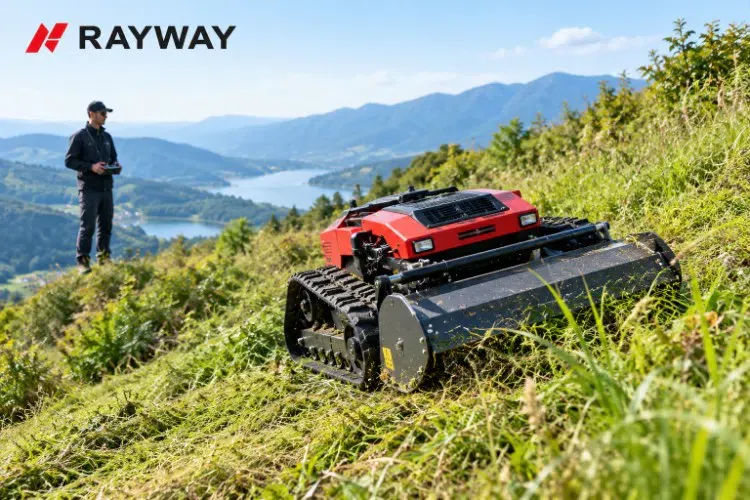
A quality hillside mower needs strong ground contact. Rubber tracks can distribute machine weight across a wider area. This design can improve grip and reduce the chance of unwanted movement on difficult ground.
A heavy duty chassis also matters. When the mower works on challenging terrain, every component faces extra stress. We believe a mower built for hills should have a strong structure from the start.
Stability Matters on Uneven Ground
Steep slopes rarely look like perfect green ramps. Real working areas contain bumps, dips, stones, and tall grass. Therefore, a remote control slope mower should maintain stable movement across changing surfaces.
The machine should also keep a suitable center of gravity. A low and balanced design can help the mower handle slopes with greater confidence.
Why Remote Control Helps on Steep Slopes
Traditional mowing can place the operator close to the machine. That becomes a serious concern when the ground becomes steep, wet, or unpredictable. Remote control mowers create physical separation between the operator and the cutting machine.
Keep a Safe Distance
The operator can stand away from the mower while maintaining control. However, distance does not mean ignoring the machine. We always recommend maintaining a suitable safe distance and keeping the mower within a clear line of sight.
OSHA guidance also stresses terrain assessment and manufacturer slope limits before mowing. Operators should identify hazards such as drop-offs, ditches, wet spots, and hidden obstacles.
Better Control, Less Physical Strain
Remote operation can make difficult mowing tasks easier to manage. The operator can watch the mower from a safer position and adjust its direction when conditions change.
This approach becomes especially useful around embankments, orchards, riverbanks, and roadside areas. Instead of fighting the hill, we can focus on controlling the machine.
Features to Look for in an RC Slope Mower
Not every rc slope mower suits demanding work. Before choosing a machine, we suggest checking several practical features.
Adjustable Cutting Height
An adjustable cutting height helps the mower adapt to different grass conditions. Short lawn grass and tall weeds need different cutting settings.
For tall grass, a higher initial setting can reduce cutting resistance. Operators can then lower the height when conditions allow.
Strong Drive and Cutting Systems
A heavy duty drive system supports repeated work on difficult surfaces. The cutting system should also provide enough power for thick and tall vegetation.
We recommend checking:
- Track or wheel design
- Maximum working slope
- Cutting width
- Cutting height range
- Engine or motor output
- Remote control range
- Emergency stop system
- Machine weight
- Ground clearance
These details help buyers compare machines based on real working conditions.
Can Remote Mowers Work on Wet Grass?
Wet grass creates another challenge. Moisture can reduce traction and make slopes more slippery. It can also cause grass to stick around the cutting system.
Weather Changes the Job
We do not treat wet grass as a small detail. On steep ground, even a small loss of traction can change machine behavior. Robotic mower guidance also warns that wet grass can increase slipping risks on slopes.
Before mowing, check the ground carefully. If the surface feels too soft or slippery, waiting for better conditions may save time later.
Remote Mower vs Robot Lawn Mower
A robot lawn mower and a remote-controlled mower serve different working needs. Robotic models often suit maintained lawns and programmed mowing areas. They can provide convenient automatic operation within their designed limits.
Which Machine Fits Challenging Terrain?
For large slopes, tall grass, and rough surfaces, buyers should study machine specifications carefully. Some robotic models support significant slopes, but each model has a defined operating range. For example, Husqvarna provides specific slope limits for different robotic mower models.
A professional remote mower gives the operator direct control. This can be useful when terrain changes quickly or obstacles require immediate decisions.
An entry level machine may suit simple lawns. However, challenging terrain often requires stronger traction and a more capable drive system.
How to Choose a Mower Built for Hills
The best machine depends on the job rather than a single specification. We suggest starting with the terrain and working backward.
Check These Conditions First
Consider:
- Slope angle
- Ground surface
- Grass height
- Soil moisture
- Working area size
- Obstacles
- Required cutting height
- Operator visibility
- Expected working hours
- Long term maintenance
The phrase mower built for slopes should mean more than marketing language. Look for specifications that explain how the machine performs on real terrain.
OSHA recommends following the manufacturer's slope limits and using specialized equipment where normal riding mowers cannot safely operate.
Why RAYWAY Focuses on Difficult Terrain
At Shandong RAYWAY Lawnmower, we understand that every hillside has its own personality. Some slopes are smooth, while others look like nature designed an obstacle course. That is why we focus on remote-controlled machines for demanding mowing environments.
Designed for Practical Mowing
Our remote control lawn mower solutions target orchards, hillsides, mountains, riverbanks, roadsides, farms, and other complex areas. We focus on strong climbing ability, stable movement, simple control, and efficient cutting.
For us, the goal is simple: help operators complete difficult mowing work with less physical exposure. The machine handles the grass while the operator stays in control.
Final Thoughts
The Best Remote-Controlled Lawn Mower for Steep Slopes and Hills should match the terrain, grass, weather, and workload. Strong traction, a stable chassis, reliable remote control, and adjustable cutting height all matter. Safety also depends on proper training, terrain checks, manufacturer limits, and a clear line of sight.
We believe the right remote mower for steep slopes should make difficult work more manageable, not more complicated. When the terrain gets rough, a purpose-designed hillside mower can turn a frustrating job into a controlled operation.


