
For many people, mowing grass feels like a weekend chore. We push a machine across the yard, follow neat lines, and hope the weather stays dry. However, the story behind the lawn mower is much more exciting than a simple backyard task. When we ask “When Was The Lawnmower Invented?”, we discover a journey filled with engineering ideas, clever inventions, and continuous improvement.
The lawn mower was invented in 1830 by Edwin Beard Budding, an engineer from England. His invention changed how people maintained gardens, parks, and sports fields. Before that time, workers mainly used scythes to cut grass. The process was slow, tiring, and difficult.
Today, we see amazing machines like the Remote-controlled Lawn Mower, robotic lawn mowers, and advanced electric models. These modern machines show how far lawn care technology has traveled. From a simple hand-powered machine to intelligent mowing robots, the evolution is truly impressive.
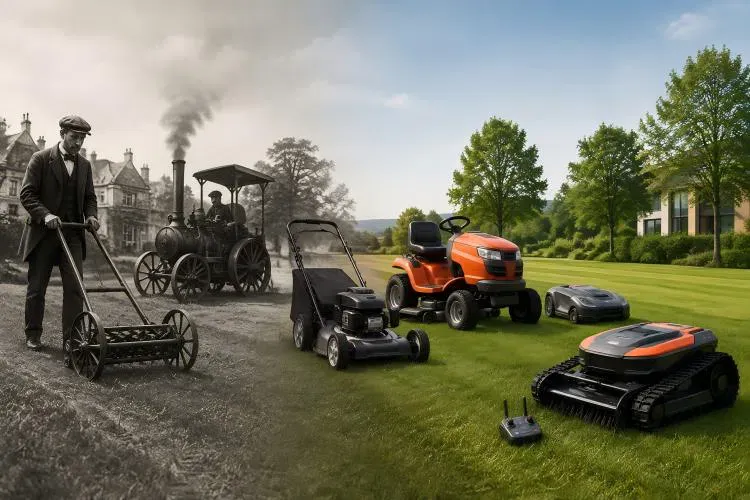
The Birth of The Modern Lawn Mower
The first mechanical mower appeared during the Industrial Revolution. Engineers looked for ways to replace hard manual labor. Edwin Budding found inspiration from a surprising place: a cloth factory.
Edwin Budding’s Revolutionary Idea in 1830
In 1830, Edwin Budding created a machine that used a rotating cutting cylinder. He noticed that a similar mechanism trimmed fabric in a textile mill. He believed the same idea could cut grass efficiently.
Budding designed a reel mower with blades attached to a rotating cylinder. The machine used wheels and gears to move the blades. Unlike a simple cutting tool, it created an even lawn surface.
His original design included a wrought iron frame and a rear roller. Users pushed the machine from behind. The movement powered the cutting system through connected gears.
The first mower looked very different from today’s machines. It was heavy, fully manual, and required physical effort. Still, it became the foundation for every modern mower we use.
Why Budding Created The First Mower
Budding designed his invention mainly for large gardens and grass on sports grounds. Maintaining these areas required many workers before mechanical mowing existed.
The new machine offered several advantages:
· Faster grass cutting
· More consistent lawn height
· Less dependence on manual labor
· Better-looking gardens and playing fields
The invention quickly gained attention. Garden owners and sports organizations recognized its value.
How Lawn Mower Technology Developed Over Time
After Budding’s invention, manufacturers continued improving mower designs. Each generation solved new problems. Some machines became larger, while others became easier to operate.
From Reel Mower To Rotary Lawn Mower
The early reel mower worked well on smooth lawns. However, people needed machines for different environments. Engineers developed the rotary lawn mower to handle tougher grass conditions.
A rotary lawn mower uses a spinning blade underneath the machine. This design cuts grass quickly and handles uneven surfaces better. It became popular for residential lawns and commercial landscaping.
Over time, manufacturers introduced different categories:
· Push mower models for small yards
· Riding mowers for large properties
· Brush mower machines for thick vegetation
· Powered mower systems for professional use
Each design improved efficiency and user comfort.
The Arrival Of Steam-Powered And Engine Models
Early mowers depended entirely on human strength. Later, engineers experimented with animal power and mechanical systems. It took decades before the first steam-powered lawn mower appeared.
The introduction of gasoline engines created another major change. Powered machines could cover larger areas faster. Farmers, golf courses, and landscape companies adopted them quickly.
However, traditional engines created challenges. Noise, fuel consumption, and maintenance became common concerns. This encouraged engineers to search for cleaner solutions.
Modern Lawn Mowers Enter The Smart Era
Technology has transformed lawn care dramatically. Today, homeowners can choose machines that almost mow by themselves.
The Rise Of Robotic Lawn Mowers
Modern robotic lawn mowers use sensors, navigation systems, and smart programming. They can automatically cut grass while avoiding obstacles.
Many robotic models provide features such as:
· Automatic charging
· Scheduled mowing
· Weather detection
· Boundary recognition
· Quiet operation
These machines save time and reduce physical effort. For busy homeowners, they feel like having a small gardening assistant.
Why Remote-Controlled Lawn Mowers Are Growing
The Remote-controlled Lawn Mower represents another major step forward. Unlike traditional equipment, operators can control the machine from a distance.
At RAYWAY, we understand that many landscapes create challenges. Some areas contain uneven terrain, thick vegetation, or dangerous sections. Remote technology allows operators to manage mowing safely.
A modern remote control lawn system offers benefits including:
· Improved safety
· Better operation visibility
· Reduced physical workload
· Higher efficiency
For professional landscaping, farms, and challenging environments, remote control mowers provide a practical solution.
Advanced Mowers For Difficult Landscapes
Not every lawn is flat and simple. Many properties include hills, fields, and difficult terrain. Standard machines may struggle in these areas.
Cutting Grass On Steep Slopes
Operating machines on steep slopes can create safety risks. Traditional riding mowers may lose stability on extreme angles. Workers must carefully manage balance and traction.
Remote-controlled technology changes this situation. Operators can stand safely away from dangerous areas while controlling the mower.
This advantage makes remote machines useful for:
· Mountain gardens
· Large farms
· Public parks
· Roadside vegetation management
Brush Mower Solutions For Tough Vegetation
A normal lawn mower works well on regular grass. However, thicker plants require stronger equipment. A brush mower handles weeds, tall grass, and rough vegetation.
Professional users often choose powerful machines because they need reliable performance. Strong cutting systems help maintain large areas efficiently.
Modern machines are built with durability in mind. Many mowers are built using strong materials and advanced engineering to survive demanding environments.
Electric Lawn Mowers And The Future Of Green Technology
Environmental concerns have changed consumer choices. Many users now prefer quieter and cleaner equipment.
The Growth Of Electric Lawn Mowers
Electric lawn mowers have become increasingly popular. They produce less noise and require less maintenance than traditional fuel models.
Their advantages include:
· Lower operating costs
· Reduced emissions
· Simple maintenance
· Comfortable operation
Battery technology continues improving. Future electric models will likely become more powerful and efficient.
The Future Of Remote Control Mowers
The next generation of mowing technology will combine automation, artificial intelligence, and remote operation. Future machines may analyze grass conditions and adjust cutting methods automatically.
At RAYWAY, we believe intelligent mowing technology will continue changing the industry. The goal is simple: make grass maintenance safer, smarter, and easier.
Why The History Of Lawn Mowers Still Matters Today
Understanding mower history helps us appreciate modern innovation. The journey from Budding’s manual machine to today’s smart equipment shows human creativity.
The first mower solved a basic problem: cutting grass faster. Modern machines solve bigger challenges, including safety, efficiency, and environmental protection.
From a simple push mower in 1830 to today’s control lawn mowers, every improvement represents years of engineering progress.
The lawn mower may seem like an ordinary tool. However, its history proves that even simple ideas can create worldwide change.
Conclusion: From Edwin Budding To Intelligent Mowing
So, when was the lawnmower invented? The answer is 1830, when Edwin Beard Budding introduced his groundbreaking design. His invention replaced slow manual cutting methods and opened the door to modern lawn care.
Today, we have everything from rotary lawn mower systems to remote-controlled lawn solutions. The industry continues moving forward with smarter designs and cleaner technology.
At Shandong RAYWAY Lawnmower, we continue this tradition of innovation. Our goal is to create reliable, intelligent mowing solutions that help customers handle every landscape challenge.
The future of mowing is not just about cutting grass. It is about creating safer, smarter, and more efficient ways to manage the world around us.


