
When grass grows too tall, ordinary mowing equipment can quickly reach its limits. Thick weeds, stubborn brush, uneven ground, and steep slopes all create extra challenges. In these situations, a flail mower offers a practical solution for demanding vegetation management.
At Shandong RAYWAY Lawnmower, we understand that different landscapes require different cutting solutions. A machine that works perfectly on a flat lawn may struggle in an orchard or on a hillside. That is why we pay close attention to cutting systems, traction, stability, and operator safety.
So, what is a flail mower, and why do farmers, contractors, and land managers choose this equipment? More importantly, how does it compare with other mowing systems? Let's explore its working principle, applications, advantages, and role in modern land maintenance.
1. What Is a Flail Mower?
A flail mower is a mechanical cutting machine that uses multiple small blades attached to a rotating horizontal rotor. These blades, commonly called flails, spin at high speed and cut grass, weeds, and light brush. Unlike traditional rotary mowers, this system uses many individual cutting elements across the rotor.
Most flail mowers use a heavy-duty housing to contain the cutting rotor. The housing helps control discharged material and protects nearby areas. As the rotor spins, the flails strike vegetation repeatedly and break it into smaller pieces.
This cutting action makes the equipment suitable for areas with mixed vegetation. It can handle grass, weeds, and certain types of woody growth. However, the actual cutting capacity depends on blade design, rotor speed, machine power, and material thickness.
How Does a Flail Mower Work?
The working principle is straightforward. A power source drives the rotor through a belt, gearbox, or hydraulic system. The rotor then rotates the attached flails at high speed.
During operation, the flails contact standing vegetation and cut it into smaller pieces. The machine distributes the chopped material across the ground behind the cutting deck. This process often leaves a relatively even layer of plant residue.
Several components work together:
- Rotor: Holds and rotates the cutting elements.
- Flails: Strike and cut grass, weeds, and brush.
- Gearbox: Transfers mechanical power to the rotor.
- Drive system: Uses belts or hydraulics to operate the cutting mechanism.
- Housing: Encloses the rotor and helps manage discharged material.
- Skids or rollers: Help control cutting height and support ground contact.
Each component affects cutting quality and operating performance. Therefore, choosing the correct machine requires more than checking engine power.
2. Main Types of Flail Mowers
Not every flail mower serves the same purpose. Manufacturers design different cutting systems for specific vegetation and working conditions. Understanding these options helps buyers avoid choosing an unsuitable machine.
Standard Flail Mowers
Standard flail mowers usually feature Y-shaped or straight cutting blades. They work well for grass, weeds, and relatively light vegetation. Farmers often use them in orchards, fields, parks, and roadside areas.
Y-shaped flails provide a relatively fine finish on grass. Straight blades can handle tougher vegetation, depending on their thickness and design. Both options offer useful performance for regular land maintenance.
Heavy-Duty Flail Mowers
Heavy-duty models feature stronger rotors, reinforced housings, and more durable cutting elements. They can handle thicker weeds and certain types of brush. Contractors often select these machines for demanding vegetation management projects.
However, heavy-duty equipment still has operating limits. Large branches, stones, and excessive woody material can damage the rotor. Operators should always check the manufacturer's cutting capacity before starting work.
Remote-Controlled Flail Mowers
Remote-controlled machines combine a flail cutting system with remote operation. They allow operators to control the equipment from a safer position. This design becomes especially useful on steep slopes, embankments, and difficult terrain.
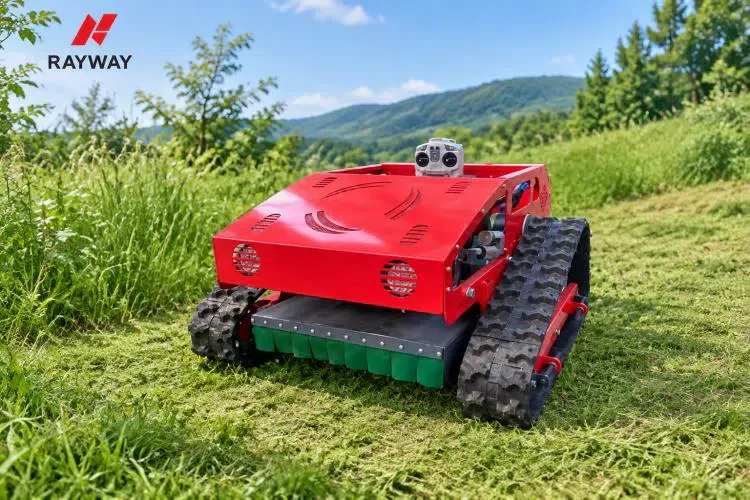
At Shandong RAYWAY Lawnmower, we focus on remote-controlled crawler mowers for challenging mowing conditions. Rubber tracks improve traction and help distribute machine weight across the ground. Combined with suitable cutting attachments, these machines support efficient work across demanding landscapes.
Flail Mowers with Specialized Cutting Attachments
Some machines accept different cutting attachments for specific applications. These may include specialized flail heads and mulching heads. Each attachment offers different cutting characteristics.
For example, a grass-cutting head suits routine vegetation control. A heavier brush-cutting attachment may handle denser growth. Meanwhile, specialized mulching heads process certain woody materials into smaller fragments.
Before selecting an attachment, consider:
- Maximum vegetation diameter.
- Required cutting height.
- Rotor speed and available power.
- Ground conditions and slope angle.
- Desired finish and material distribution.
- Maintenance requirements and replacement costs.
The right attachment can improve productivity. However, compatibility always comes first.
3. Common Flail Mower Applications
Flail mower applications cover many industries and landscapes. Their ability to process different types of vegetation makes them useful beyond ordinary lawn maintenance. Let's look at several common examples.
Agriculture and Orchard Maintenance
Farmers often use flail mowers to manage grass between crop rows. Orchards provide a good example because vegetation grows around trees throughout the season. Regular cutting helps maintain access for farm workers and machinery.
A suitable flail mower can manage:
- Grass between fruit tree rows.
- Weeds around orchard access roads.
- Vegetation along field boundaries.
- Overgrown areas near irrigation channels.
- Grass and light brush around farm buildings.
Furthermore, chopped plant material can remain on the ground. This residue may provide useful soil cover when operators manage it correctly. However, excessive mulch can create problems around tree trunks and drainage areas.
Roadside and Infrastructure Maintenance
Roadside vegetation creates visibility and access challenges. Tall grass can cover signs, block drainage channels, and restrict sightlines. Regular mowing helps keep these areas manageable.
Flail mowers also work along certain railway boundaries, drainage channels, and public green spaces. Specialized machines can reach side slopes and roadside banks. Operators must still consider traffic, obstacles, and local safety requirements.
Steep Slope and Hillside Mowing
Steep slope maintenance presents a different challenge. Conventional riding mowers can lose traction or become unstable on unsuitable gradients. Walking behind heavy equipment can also expose operators to serious risks.
Remote control mowers offer another approach. Operators can stand away from the cutting area while controlling the machine. Tracked designs provide traction across many uneven surfaces, although safe operating limits remain essential.
At RAYWAY, we believe operator positioning matters just as much as cutting performance. A suitable remote-controlled flail mower can help reduce direct exposure to difficult terrain. Always follow the machine's rated slope limits and operating instructions.
Utility-Scale Solar Vegetation Management
The growth of clean energy creates new land maintenance requirements. Large solar farms need regular vegetation control beneath and between panel rows. Unmanaged plants can interfere with maintenance access and nearby electrical infrastructure.
For utility scale solar projects, mowing forms part of broader vegetation management strategies. Operators must balance grass height, soil protection, biodiversity, and fire prevention.
A flail mower can help control unwanted vegetation without requiring constant manual cutting. Remote control mowers can also access certain uneven areas around solar installations. However, operators must protect cables, panel supports, and other infrastructure during every mowing operation.
4. Why Do Land Managers Choose Flail Mowers?
Flail mowers offer several practical advantages. Their cutting system suits mixed vegetation and demanding maintenance tasks. Nevertheless, the benefits depend on the machine, attachment, and working environment.
Effective Cutting and Mulching Performance
A flail rotor uses multiple cutting elements to process vegetation. It can break grass and weeds into smaller pieces during operation. This helps distribute plant residue across the working area.
Smaller plant fragments may decompose more easily than long, uncut stems. They can also provide temporary ground cover. However, the final result depends on vegetation type, cutting conditions, and rotor configuration.
Better Control of Dense Vegetation
Ordinary lawn mowers generally target shorter grass and maintained lawns. Flail mowers offer greater flexibility when dealing with mixed vegetation. This makes them useful for fields, orchards, and neglected green spaces.
They can also help manage certain types of light brush. However, no flail mower can handle every plant species or branch size. Choosing suitable equipment remains important.
Improved Operator Positioning
Operator safety deserves serious attention during vegetation management. Riding mowers place operators directly on the machine. This arrangement may become unsuitable on certain steep or uneven surfaces.
Remote-controlled equipment changes the operating position. The operator can control the machine from a suitable location outside its immediate working area. This can reduce the risk of direct exposure to rollover hazards and flying debris.
Remote operation does not eliminate every hazard. Operators still need clear visibility, safe distances, and proper training. They must also monitor people, animals, obstacles, and changing ground conditions.
Reduced Dependence on Chemical Weed Control
Mechanical mowing offers an alternative to some chemical vegetation treatments. It can suppress unwanted growth without applying herbicides during the mowing operation. This approach may support more eco friendly land maintenance strategies.
However, mowing does not automatically eliminate invasive plants. Some species recover quickly or spread through root systems. Effective control may require repeated cutting and additional management methods.
Support for Soil Cover and Soil Health
A flail mower often leaves chopped vegetation behind. This material can contribute to ground cover when operators manage it appropriately. Ground cover helps protect soil from direct rainfall and reduces exposure.
The USDA Natural Resources Conservation Service emphasizes soil cover and reduced disturbance as important soil health principles. Therefore, appropriate mowing practices can support wider conservation goals. Still, a mower alone cannot guarantee better soil health.
Operators should avoid unnecessary passes over wet ground. Heavy machinery can compact soil under unsuitable conditions. Good timing and appropriate equipment selection make a meaningful difference.
5. Flail Mowers and Environmental Protection
Modern land management involves more than keeping grass short. Landowners also consider soil quality, biodiversity, fire prevention, and long-term maintenance costs. Flail mowers can contribute to these goals when operators use them correctly.
Maintaining Soil Cover
Cut vegetation can create a protective layer across the ground. This layer helps reduce direct raindrop impact and moisture loss. It may also slow unwanted weed growth.
However, maintaining soil cover requires careful management. Excessive cutting can expose the soil and damage desirable plants. We recommend choosing a suitable cutting height for each working environment.
Good practices include:
- Avoid cutting all vegetation too close to the ground.
- Keep suitable plant cover wherever practical.
- Avoid unnecessary machine passes.
- Reduce operations on wet or soft soil.
- Distribute plant residue evenly when appropriate.
- Protect tree roots and drainage channels.
These steps help maintain soil cover and support soil health.
Reducing Fire Hazards
Vegetation management plays an important role in fire prevention. Dry grass, dead weeds, and unmanaged brush can provide combustible material. This becomes particularly important around solar installations and infrastructure.
Flail mowing can reduce standing vegetation and help manage certain areas. However, cutting alone does not guarantee fire prevention. Operators must also consider dry plant residue, local fire regulations, and equipment-related ignition risks.
For solar farms, maintenance teams should pay particular attention to electrical equipment and access routes. The USDA recommends planned vegetation management for utility-scale solar projects. A suitable maintenance schedule can help operators identify problems before vegetation becomes difficult to control.
Supporting Renewable Energy Projects
Solar energy continues to expand across many regions. Large solar installations require reliable maintenance throughout their operating lives. Grass control remains an important part of that process.
Remote-controlled flail mowers offer a practical option for selected solar farm conditions. Their compact designs and tracked movement can help access certain areas. Operators can also maintain a safer position while cutting vegetation.
In addition, some solar projects use sheep grazing instead of relying entirely on mechanical mowing. Combining different methods may create more flexible vegetation management strategies.
The goal is simple: support clean energy production while maintaining healthy and manageable land.
6. Flail Mower vs. Other Cutting Equipment
Choosing between different machines can feel confusing. Each cutting system has its strengths and limitations. The best choice depends on vegetation, terrain, working area, and maintenance requirements.
Flail Mower vs. Rotary Mower
Both machines cut vegetation, but their cutting systems differ.
| Feature | Flail Mower | Rotary Mower |
|---|---|---|
| Cutting system | Multiple rotating flails | One or more rotating blades |
| Grass cutting | Very suitable | Very suitable |
| Thick weeds | Suitable within rated limits | Depends on design |
| Light brush | Suitable for selected models | Depends on blade design |
| Material handling | Often produces smaller fragments | Often produces larger clippings |
| Terrain | Available in specialized slope models | Depends on machine design |
| Maintenance | Multiple flails and rotor components | Blades and drive components |
A rotary mower may suit regular lawn maintenance. A flail mower may offer greater flexibility for mixed vegetation and rougher areas.
Neither system wins every situation. Buyers should compare actual cutting requirements rather than relying on product names.
Flail Mower vs. Skid Steer Attachments
Skid steers can operate specialized flail mower attachments. These combinations offer strong performance for many commercial applications. They also provide flexibility because operators can change attachments.
However, skid steers need suitable access and ground conditions. Their weight and dimensions may limit operation in narrow spaces or on certain slopes.
Remote-controlled tracked machines provide another option. They can work in selected areas where larger equipment creates access difficulties. The correct choice depends on site conditions and required cutting capacity.
7. How to Choose the Right Flail Mower
Buying a flail mower requires more thought than comparing prices. A suitable machine should match the vegetation, terrain, and working schedule. Here are the main factors we recommend checking.
Evaluate Vegetation Type
Start by identifying the plants you need to control.
- Short grass: A standard grass-cutting head may work well.
- Tall grass: Check rotor design and available cutting power.
- Thick weeds: Consider a stronger flail configuration.
- Light brush: Check the manufacturer's maximum cutting capacity.
- Woody vegetation: Consider a specialized brush or mulching attachment.
Never assume every flail mower handles the same vegetation. Cutting capacity varies considerably between models.
Consider Terrain and Slope
Ground conditions influence machine stability and productivity. Flat fields offer different challenges from steep hillsides. Wet soil, loose gravel, and uneven ground also affect traction.
For difficult terrain, consider:
- Machine weight and center of gravity.
- Track or wheel configuration.
- Maximum rated operating slope.
- Ground clearance.
- Remote control range and visibility.
- Emergency stop and safety features.
A tracked Remote-controlled Lawn Mower may suit demanding hillside applications. However, operators must always respect the manufacturer's operating limits.
Check Engine Power and Cutting Width
Engine power directly affects cutting performance under load. Cutting width determines how much ground the machine covers during each pass. Both specifications influence overall productivity.
Consider the following questions:
- How tall does the vegetation normally grow?
- How thick are the weeds and brush?
- How many hours will the machine operate?
- What working width suits the available space?
- Does the machine offer adjustable cutting height?
A wider machine does not always provide better results. Narrow spaces and obstacles may require a smaller cutting deck.
Review Maintenance Requirements
A reliable machine needs regular inspection and maintenance. Flails experience wear because they repeatedly contact vegetation and sometimes encounter hidden obstacles.
Before purchasing, check:
- Flail replacement costs and availability.
- Rotor and bearing maintenance.
- Belt or hydraulic system requirements.
- Gearbox lubrication intervals.
- Cleaning and inspection access.
- Local technical support and spare parts.
Regular maintenance helps protect equipment performance and reduce unexpected downtime.
8. Safe Operating Tips for Flail Mowers
Even powerful machines need careful operators. A flail rotor contains fast-moving cutting elements that can cause serious injuries. Therefore, safety should always come before working speed.
We recommend following these basic practices:
Before Starting
- Inspect the rotor and cutting elements.
- Check guards, covers, and safety devices.
- Remove large stones and hidden obstacles when possible.
- Check for people and animals nearby.
- Confirm that the working area suits the machine.
- Read the manufacturer's operating instructions.
During Operation
- Maintain a safe distance from other people.
- Avoid operating beyond the rated slope limit.
- Never approach a moving cutting rotor.
- Watch for unexpected changes in terrain.
- Avoid cutting in unsuitable weather conditions.
- Stop immediately if unusual vibration develops.
After Finishing
- Stop the engine or power system.
- Wait until all moving parts stop completely.
- Remove accumulated grass and debris safely.
- Inspect flails for damage or excessive wear.
- Follow the manufacturer's maintenance schedule.
For remote-controlled machines, operators should also maintain a clear view of the equipment. Remote operation improves positioning, but it does not replace proper training.
9. Why Remote-Controlled Flail Mowers Matter
Land maintenance is becoming more demanding. Agricultural areas, solar farms, roadsides, and public spaces all need reliable vegetation control. Meanwhile, labor availability and operator safety remain important concerns.
At Shandong RAYWAY Lawnmower, we focus on developing remote-controlled crawler mowers for challenging working environments. Our machines combine tracked mobility, remote operation, and practical cutting capabilities. They help operators manage grass across slopes, orchards, farms, and other difficult areas.
We believe modern mowing equipment should deliver more than cutting power. It should also provide stable movement, convenient operation, and dependable performance. These qualities matter when operators maintain large areas or difficult terrain.
For suitable applications, remote-controlled flail mowers can help:
- Reduce direct operator exposure on difficult slopes.
- Improve access to selected uneven areas.
- Manage tall grass and dense vegetation.
- Support regular agricultural maintenance.
- Maintain vegetation around renewable energy installations.
- Reduce the physical effort required for mowing.
Of course, every project has different requirements. The correct machine should match the vegetation, terrain, and expected workload.
10. Frequently Asked Questions About Flail Mowers
What Is the Main Purpose of a Flail Mower?
A flail mower cuts grass, weeds, and certain types of brush. It uses multiple rotating blades to break vegetation into smaller pieces. Farmers, contractors, and land managers use it for regular vegetation control.
Can a Flail Mower Cut Thick Brush?
Yes, some heavy-duty models can handle light brush and woody growth. However, cutting capacity depends on the flails, rotor power, and machine design. Always check the manufacturer's maximum cutting specifications.
Is a Flail Mower Suitable for Steep Slopes?
Specialized flail mowers can work on selected slopes. Remote-controlled tracked models offer improved operator positioning and useful traction. However, operators must follow the machine's rated slope limits.
Does a Flail Mower Improve Soil Health?
A flail mower can leave chopped vegetation across the soil surface. This residue may help maintain ground cover and reduce erosion. However, soil health also depends on cutting height, traffic, vegetation selection, and overall land management.
Are Flail Mowers Eco Friendly?
Flail mowers provide mechanical vegetation control without requiring herbicides during mowing. They can also support soil-cover management when operators use appropriate cutting practices. However, fuel consumption, soil disturbance, and wildlife protection still matter.
Can Flail Mowers Work Around Solar Panels?
Yes, suitable flail mowers can maintain vegetation around solar installations. Compact remote-controlled machines may help access certain spaces between panel rows. Operators must protect cables, panel supports, and electrical equipment.
Conclusion
So, what is a flail mower? It is a versatile vegetation management machine that uses rotating flails to cut grass, weeds, and selected brush. Its applications extend across agriculture, roadside maintenance, steep slopes, and utility-scale solar projects.
However, choosing the right cutting system matters. Vegetation type, terrain, machine power, and operator safety should guide every purchasing decision.
At Shandong RAYWAY Lawnmower, we believe remote-controlled mowing technology offers valuable solutions for difficult working environments. By combining suitable cutting systems with tracked mobility, we help customers approach challenging vegetation management tasks more efficiently.
Looking for a remote-controlled flail mower for your next project? Contact Shandong RAYWAY Lawnmower to explore suitable equipment for your working conditions.


