
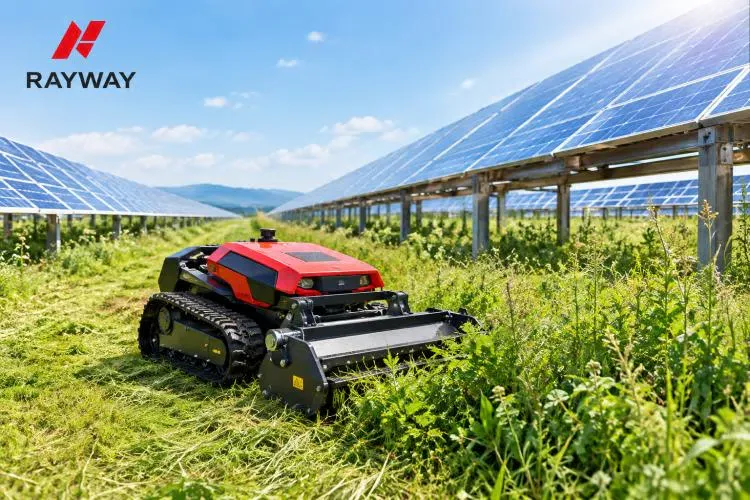
Grass grows quickly, but solar farms need careful maintenance. Tall grass can block access paths, increase fire hazards, and make daily inspections harder. For solar developers, effective vegetation management helps protect equipment and maintain reliable energy production. At Shandong RAYWAY Lawnmower, we believe the right mowing equipment makes this work safer and more efficient.
Why Is Grass Control Important for Solar Farms?
A well-maintained solar site supports smooth operations and long-term performance. Although grass does not usually block sunlight directly, uncontrolled vegetation can create several problems. It may hide cables, restrict maintenance access, and increase the risk of pests. In dry seasons, tall grass can also become a potential fire hazard.
Protect Solar Equipment and Site Access
Grass cutting around solar panels helps keep walkways, inspection areas, and equipment zones accessible. Workers can identify potential problems more easily when vegetation stays under control. Regular mowing also helps maintenance teams move around the solar site without fighting through weeds. After all, nobody wants a routine inspection to become a jungle expedition!
Support Long-Term Solar Energy Production
Effective solar vegetation control helps teams maintain safe working conditions and reliable access to equipment. It also supports regular inspections and planned maintenance. For utility scale solar projects, these benefits become increasingly important as the site grows. A consistent maintenance plan helps solar developers manage costs over the long term.
Best Methods for Controlling Vegetation
Different solar farms require different vegetation management strategies. The best choice depends on grass height, ground conditions, panel spacing, and local climate. We recommend assessing the site before choosing equipment or setting a mowing schedule.
1. Mow Grass Regularly
Regular mowing is one of the simplest ways to control grass growth around solar panels. Teams should adjust mowing frequency according to seasonal growth and rainfall. During warm, wet periods, grass may require more frequent cutting. Before mowing, operators should check for exposed cables, obstacles, and sensitive equipment.
2. Use Remote-Controlled Lawn Mowers
A Remote-controlled Lawn Mower offers an effective solution for challenging solar farm terrain. Operators can control the machine from a safer position instead of walking behind conventional equipment. Remote control mowers can also reach slopes and uneven ground that make traditional mowing difficult.
At Shandong RAYWAY Lawnmower, we develop machines for demanding grass-cutting conditions. Tracked models can provide useful traction on suitable slopes and rough surfaces. Their compact design may also help operators navigate selected areas between solar installations. However, operators must check machine dimensions, turning space, and ground clearance before entering narrow rows.
3. Choose the Right Cutting Equipment
Different vegetation requires different cutting solutions. Light grass may need only routine trimming, while dense weeds require a more powerful machine. Riding mowers can work well in open areas with sufficient clearance. However, they may struggle with steep slopes or restricted spaces.
When selecting equipment, consider these factors:
Grass height: Choose a machine that handles the expected vegetation.
Terrain: Check slopes, soft soil, and uneven surfaces.
Panel spacing: Confirm that the mower fits safely between rows.
Cutting height: Adjust the setting to suit the site conditions.
Operator safety: Maintain clear visibility and safe operating distances.
Eco-Friendly Solar Vegetation Management
Solar farms support renewable energy, so responsible land management matters too. A suitable mowing plan can help protect soil health and reduce unnecessary disturbance. Instead of removing every plant, site managers can maintain vegetation at a controlled height. This approach can help stabilize the soil and limit erosion.
Maintain Soil Health and Reduce Erosion
Grass roots help hold soil together, especially on slopes and exposed ground. Therefore, mowing too closely may damage vegetation cover and increase erosion risks. We recommend selecting a suitable cutting height and avoiding unnecessary soil disturbance. Teams should also consider drainage patterns and local environmental requirements.
Reduce Fire Hazards Responsibly
Dry weeds and tall grass can increase fuel loads around electrical infrastructure. Regular inspections help teams identify vegetation that requires attention. Operators should remove excessive growth according to site safety procedures. They must also follow local fire prevention rules and the solar facility's operating requirements.
Build a Practical Long-Term Maintenance Plan
Successful vegetation management depends on consistent monitoring rather than occasional emergency mowing. A clear schedule helps teams control costs and respond to changing conditions. We suggest including these tasks in a regular maintenance plan:
Inspect vegetation growth at least weekly during rapid growth periods.
Schedule mowing according to weather and site conditions.
Check equipment before each operation.
Keep access routes and designated safety zones clear.
Record mowing dates, problem areas, and maintenance results.
Review the plan after heavy rain or prolonged dry weather.
For large solar farms, remote-controlled equipment may reduce the need for operators to enter difficult mowing areas. However, every site needs a suitable equipment assessment and trained operators. These steps help teams maintain safe working conditions and support efficient clean energy operations.
Choose Smarter Grass Control for Solar Farms
Controlling vegetation around solar panels requires the right balance of safety, efficiency, and environmental care. Regular mowing, suitable equipment, and careful planning can prevent many common maintenance problems. For difficult terrain, a Remote-controlled Lawn Mower can offer a practical alternative to conventional mowing equipment.
At Shandong RAYWAY Lawnmower, we understand that every solar site presents different challenges. We believe smarter mowing solutions help maintenance teams work with greater confidence. With the right strategy, solar developers can manage vegetation effectively and keep their clean energy projects running smoothly.


