
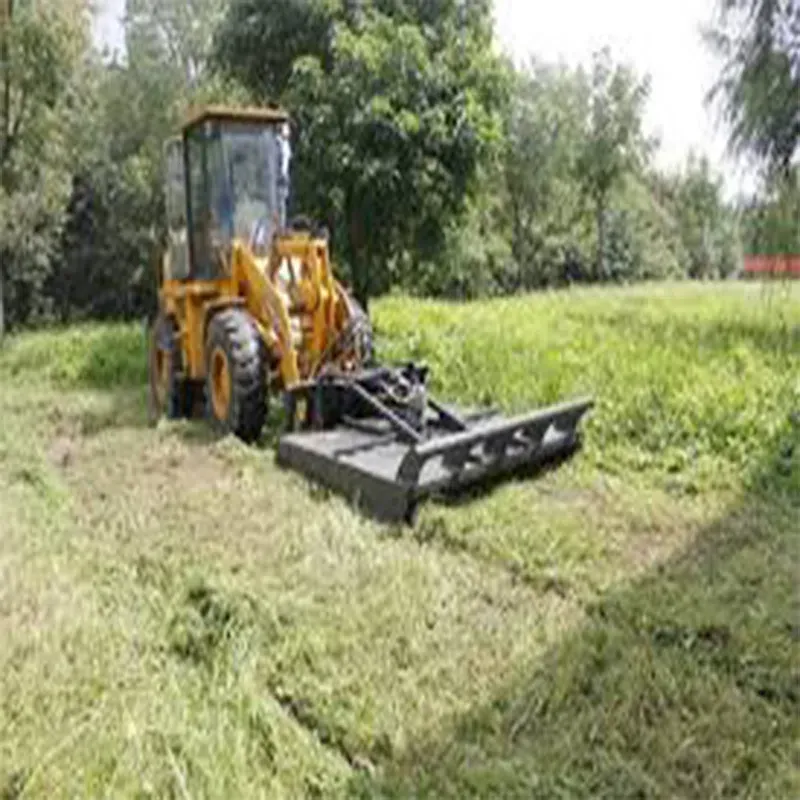
How to Choose the Perfect Lawn Mower for Residential & Commercial Use
Global Lawn Care Industry Continues to Expand
The landscaping and lawn care equipment industry has entered a period of stable global growth as urbanization, residential development, and public green space investments continue to increase worldwide. From private gardens and villa communities to municipal parks and commercial landscapes, lawn maintenance equipment has become an essential part of modern outdoor management.
As demand expands, buyers are no longer simply looking for basic cutting equipment. Today’s distributors, wholesalers, and landscaping contractors are focusing on performance efficiency, durability, operating cost, and application flexibility. This shift is driving growing interest in understanding how to choose the perfect lawn mower for residential and commercial use.
Industry analysts project that the global lawn mower market will continue to grow steadily over the next decade, supported by rising consumer awareness of outdoor aesthetics and increasing investment in professional landscaping services. In particular, compact urban landscaping and commercial property maintenance are creating strong demand for specialized mowing solutions designed for different operational scenarios.
For international B2B buyers, selecting the right lawn mower category is now a strategic purchasing decision that directly affects operational efficiency, customer satisfaction, and long-term maintenance costs.
Understanding the Difference Between Residential and Commercial Lawn Mowers
One of the most important steps in learning how to choose the perfect lawn mower for residential and commercial use is understanding the operational differences between these two market segments.
Residential lawn mowers are typically designed for smaller grass areas, lighter workloads, and easier operation. These machines prioritize compact structure, lightweight handling, and lower maintenance requirements. Homeowners generally value convenience, storage efficiency, and affordability more than maximum power output.
Commercial lawn mowers, on the other hand, are built for continuous operation across large properties and demanding terrain conditions. Landscaping contractors, municipalities, and property management companies require equipment capable of handling heavy workloads while maintaining stable cutting performance throughout long working hours.
Commercial machines usually feature reinforced cutting decks, larger engines or motors, stronger transmission systems, and wider cutting widths. Their durability and efficiency justify higher investment costs for professional applications.
Key Factors to Consider When Choosing a Lawn Mower
Selecting the ideal lawn mower depends on several practical factors related to operating environment, workload intensity, and user expectations.
The size of the mowing area is one of the most important considerations. Compact push mowers or lightweight battery-powered models are often suitable for small residential gardens, while larger riding mowers or zero-turn models are more effective for extensive commercial landscapes.
Terrain conditions also influence equipment selection. Flat lawns can be maintained efficiently with standard machines, but uneven surfaces, slopes, and dense vegetation require stronger traction systems and more powerful cutting performance.
Power source selection is another major factor. Gas-powered lawn mowers remain popular in heavy-duty commercial applications because of their strong torque and long runtime. However, battery-powered lawn mowers are rapidly gaining market share due to lower noise levels, reduced maintenance, and improved environmental performance.
For B2B buyers, maintenance requirements and spare part availability are equally important. Machines with simplified servicing systems and standardized components can significantly reduce long-term operational costs.
Technology Trends Reshaping the Lawn Mower Industry
The lawn mower industry is evolving rapidly as manufacturers invest in smarter, more energy-efficient technologies. Understanding these trends is essential for buyers seeking competitive products in global markets.
Battery-powered lawn mowers have become one of the fastest-growing product categories. Advances in lithium-ion battery technology and brushless motor systems now allow electric models to deliver longer runtime and more stable cutting performance.
At the same time, manufacturers are improving fuel efficiency and emissions control in gas-powered machines to comply with stricter environmental regulations in North America and Europe.
Automation is another emerging trend. Some high-end lawn mowers now integrate intelligent features such as adaptive speed control, automated cutting adjustment, and app-based monitoring systems. These technologies improve user convenience while enhancing cutting precision and energy efficiency.
Ergonomic design improvements are also shaping purchasing decisions. Adjustable handles, vibration reduction systems, and improved maneuverability help reduce operator fatigue, especially in professional landscaping environments.
Manufacturing Process and Quality Assurance
The quality and durability of lawn mowers depend heavily on manufacturing standards and assembly precision. Reliable manufacturers typically implement multi-stage production systems to ensure long-term product performance.
The manufacturing process generally begins with steel deck stamping or reinforced polymer molding, followed by integration of the engine or motor system. Blade balancing is a critical stage because improper alignment can affect cutting consistency and machine stability.
During assembly, manufacturers conduct detailed inspections of transmission systems, wheel structures, electrical components, and safety mechanisms. Export-oriented lawn mowers often undergo additional endurance testing to simulate real-world operating conditions.
Surface treatment processes such as powder coating and anti-corrosion finishing are commonly applied to improve weather resistance and extend equipment lifespan in outdoor environments.
For international buyers, selecting suppliers with strict quality control systems and stable production capacity is essential for maintaining long-term market competitiveness.
Market Opportunities for Global Buyers
The increasing diversification of outdoor maintenance needs is creating strong opportunities for distributors and importers in both developed and emerging markets. Residential buyers continue to seek lightweight and user-friendly equipment, while commercial operators prioritize productivity and operational durability.
In North America and Europe, battery-powered and low-noise lawn mowers are becoming increasingly popular due to environmental policies and urban noise restrictions. Meanwhile, in developing regions, cost-effective gas-powered models still maintain strong demand for commercial landscaping and municipal projects.
This diversity in market demand allows B2B buyers to develop broader product portfolios tailored to regional preferences and application scenarios.
FAQ for International Buyers
What type of lawn mower is best for residential use?
Compact push mowers and lightweight battery-powered models are generally ideal for residential gardens because they are easy to operate and store.
Are gas-powered lawn mowers still suitable for commercial landscaping?
Yes. Gas-powered lawn mowers remain widely used in commercial applications due to their strong cutting power and extended operating time.
Why are battery-powered lawn mowers becoming more popular?
Battery-powered lawn mowers offer lower noise levels, reduced maintenance requirements, and environmentally friendly operation, making them attractive in urban markets.
What should B2B buyers focus on when selecting a lawn mower supplier?
Buyers should evaluate manufacturing quality, OEM/ODM capability, spare part availability, production capacity, and after-sales support.
Conclusion
Understanding how to choose the perfect lawn mower for residential and commercial use has become increasingly important as the global landscaping equipment market continues to evolve. Buyers must carefully evaluate application requirements, power systems, durability, and technological features to select products that match changing market demands.
For distributors, wholesalers, and landscaping equipment importers, partnering with a reliable manufacturer capable of delivering stable quality and flexible customization solutions is essential for long-term success. As residential and commercial lawn care markets continue to expand worldwide, investing in the right lawn mower solutions today can create significant competitive advantages for the future.


